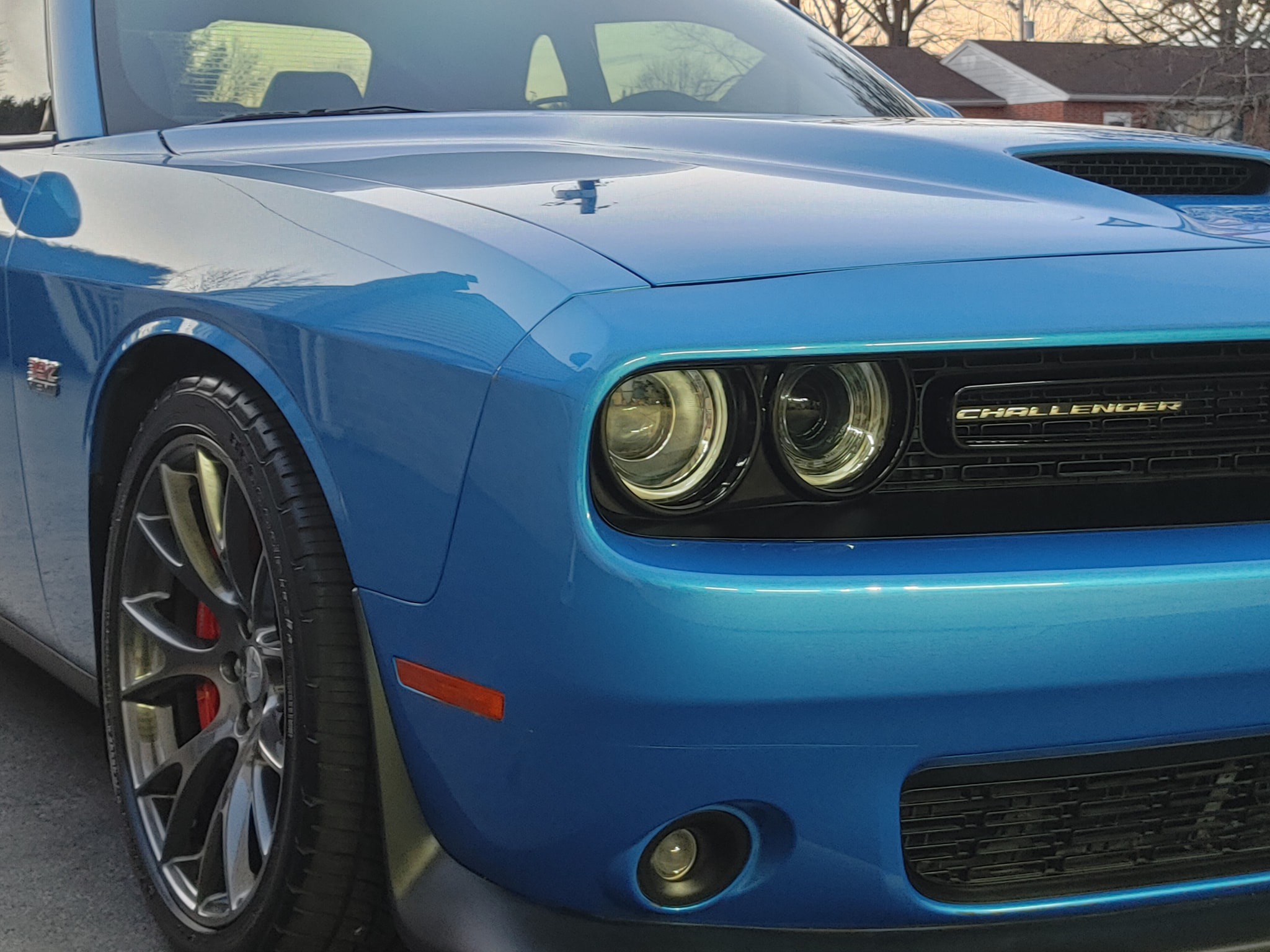
Paint correction is a machine polishing process that permanently removes swirl marks, scratches, water spots, and oxidation from your vehicle's clear coat. Unlike a polish or glaze that fills in defects temporarily, paint correction physically levels the clear coat to eliminate imperfections for good. At Attention 2 Details in Lancaster, PA, Chelsea Longabaugh has performed paint correction on hundreds of vehicles over 20+ years of detailing experience, restoring finishes that owners thought were beyond saving.
How Do Swirl Marks and Scratches Happen?
Most paint damage comes from improper washing. Automatic car washes with spinning brushes drag dirt and debris across your paint, creating circular scratches known as swirl marks. You can see them clearly in direct sunlight as a web of fine lines across the surface.
Other common causes include:
- Dirty wash mitts or towels: Wiping your paint with a contaminated cloth grinds particles into the clear coat.
- Drying with the wrong materials: Bath towels, chamois, and low-quality microfibers leave fine scratches.
- Dealership prep and delivery washes: Many new vehicles arrive with swirl marks from the dealer's wash process before you even take delivery.
- Bird droppings and tree sap: These are acidic and can etch into clear coat if left for more than a day or two, especially in warm weather.
- Water spot etching: Hard water (common in Lancaster County) leaves mineral deposits that can permanently mark your paint if not removed promptly.
What Does Paint Correction Actually Fix?
Paint correction addresses defects that exist within the clear coat layer of your paint. This includes:
- Swirl marks from washing
- Light to moderate scratches (anything you can feel with your fingernail is typically too deep for correction and requires touch-up paint)
- Water spot etching and mineral deposits
- Oxidation and fading from UV exposure
- Buffer trails or holograms from previous poor polishing attempts
- Transfer marks from other objects rubbing against the paint
The result is a surface that looks deep, glossy, and free of visual distractions. On dark-colored vehicles, the difference is dramatic. Black and dark blue cars go from looking hazy and scratched to having a mirror-like, wet appearance.
What Is the Difference Between Single-Stage and Multi-Stage Correction?
Single-stage (1-step) correction uses one polishing step with a medium-cut compound and pad combination. This removes 50 to 70% of surface defects and is the right choice for vehicles with light to moderate swirl marks and scratches. At Attention 2 Details, 1-step correction starts at $400.
Multi-stage (2-step or 3-step) correction uses progressively finer compounds and pads to remove deeper defects and then refine the surface to a high gloss. A 2-step correction can remove 80 to 95% of defects. This is recommended for vehicles with heavy swirl marks, deep scratches, or paint that has never been properly corrected. Multi-stage correction is available by quote based on the vehicle's size and condition.
Chelsea evaluates every vehicle under specialized lighting before recommending a correction level. Over-polishing removes clear coat unnecessarily, so she always recommends the least aggressive approach that will achieve the desired result.
How Do You Know If Your Car Needs Paint Correction?
Take your vehicle into direct sunlight or shine a bright flashlight across the paint at a low angle. If you see a web of fine lines, circular marks, or a hazy appearance instead of a clear, deep reflection, your paint has defects that correction can address.
Paint correction is also a critical step before ceramic coating application. A ceramic coating locks in whatever condition the paint is in, so any scratches or swirl marks that are not removed before coating will be sealed under the coating for its entire lifespan.
What Should You Expect During the Paint Correction Process?
At Attention 2 Details, paint correction is a thorough, multi-step process.
- Wash and decontamination: The vehicle receives a full hand wash followed by clay bar treatment to remove bonded contaminants like industrial fallout, rail dust, and tar.
- Paint measurement: Chelsea measures clear coat thickness with a paint depth gauge to ensure there is enough material to safely polish without burning through to the base coat.
- Test spots: A small area is corrected first using different pad and compound combinations to determine the best approach for your specific paint type and condition.
- Full correction: Every panel is systematically polished using a dual-action or rotary polisher, with multiple passes as needed. This is the most time-intensive step, typically taking 4 to 8 hours depending on the vehicle size and defect severity.
- Final inspection: The vehicle is inspected under multiple light sources to confirm defect removal and surface uniformity.
- Protection: A sealant, wax, or ceramic coating is applied to protect the freshly corrected surface.
Paint correction is one of the most transformative services we offer. Learn more about our paint correction services or book an appointment to see what your paint can really look like.